
Readiness and evidence
How to prepare for a security audit
Define the scope, review controls and gather evidence early so your security audit starts with clear priorities and owners.
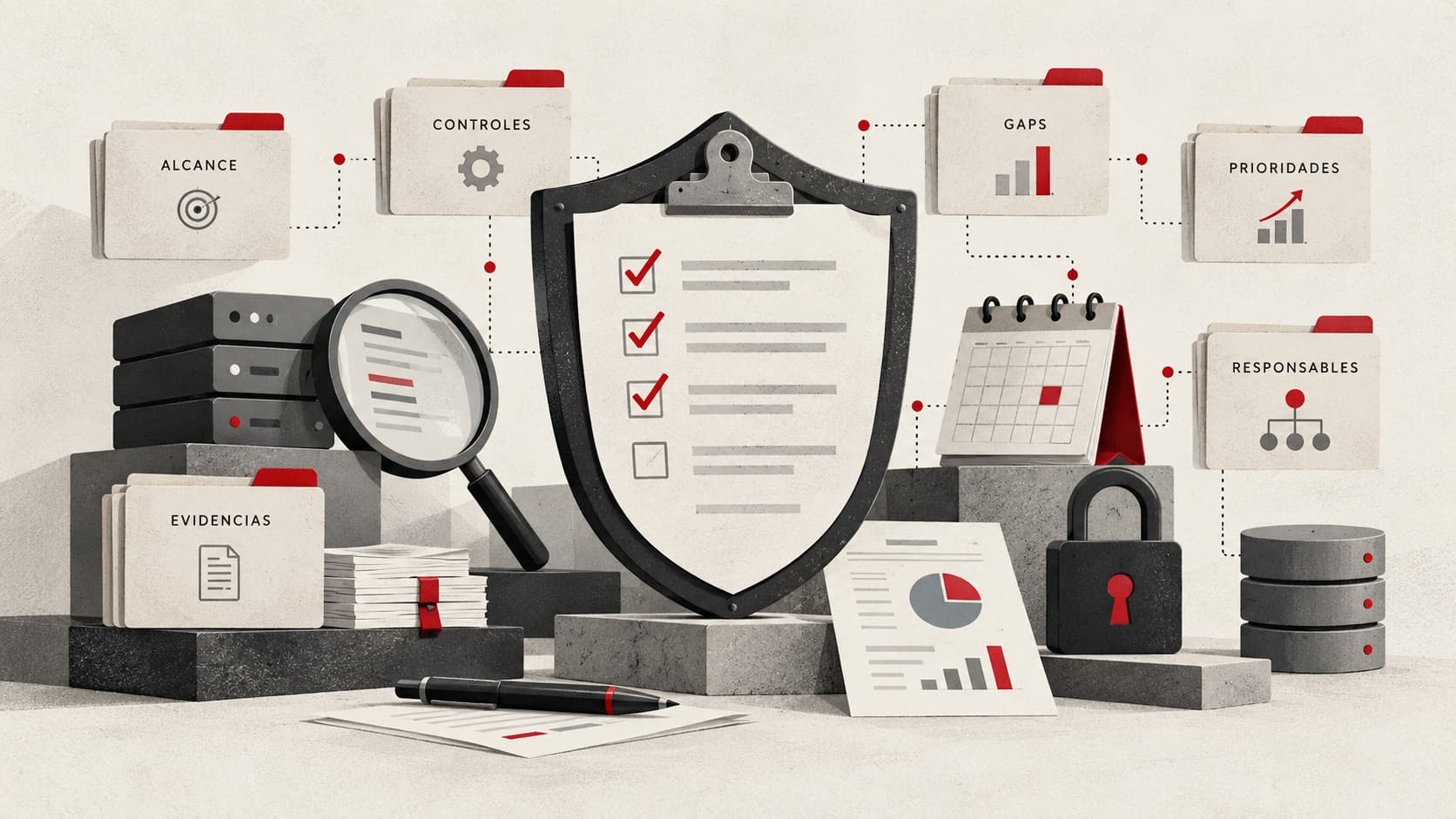
Preparing for a security audit means knowing in advance what will be assessed, checking the real state of your controls and gathering evidence that shows how they operate. An early GAP assessment, sound prioritization and prepared owners can make the audit far more organized and predictable.
A security audit should not begin a few weeks before its scheduled date, when someone starts looking for documents, screenshots or records to answer the auditor's requests. Consistent preparation requires understanding what will be reviewed, which controls are actually implemented and what evidence exists to demonstrate that they work.
At Talsoft, we treat this stage as audit preparation or a pre-audit review. The goal is to understand the company's current position, identify gaps and organize the work needed before the formal assessment.
Define what the security audit will assess
The first step is to determine precisely what will be audited. That means defining the standard or requirement under review, which areas and systems fall within scope, what period will be examined and when the review will take place.
Scope matters because it determines which controls and evidence must be prepared. An audit may cover the entire organization or focus on specific systems, processes or services. It may also require proof that certain controls operated over a defined period. Knowing what will be assessed from the beginning avoids spending time on information outside the review.
That context makes it possible to prepare more precisely and assign responsibilities early.
Conduct an internal GAP assessment before the audit
Once the scope is defined, Talsoft builds a requirements matrix and conducts an initial assessment. For each control, we examine three things: whether it is defined, whether it is actually implemented and whether sufficient evidence exists to show that it works.
This distinction is central to a security audit. A policy may be written and approved, but that does not necessarily mean the process it describes is performed consistently. Likewise, a technical control may be implemented without records showing that it operated during the period under review.
The early GAP assessment identifies these differences before the auditor does and turns them into a concrete work backlog.
Validate available controls and evidence
Evidence is often one of the hardest parts of an audit. If a company says it reviews access periodically, it needs records of those reviews. If it says it tests its backups, it should be able to present restoration results. And if it has a vulnerability management process, it needs scans, tickets, remediation records and follow-up to support that claim.
Preparing for an audit therefore involves more than reviewing documentation. It also means confirming that controls work in practice and that defensible evidence supports the claims being made.
A formal assessment may combine policies and procedures with operational records, direct observation of controls and interviews with their owners. Preparation must account for all of these dimensions.
 Audit preparation connects implemented controls with verifiable evidence and owners who can explain them.
Prioritize the gaps that could affect the audit
After the assessment comes a key decision: what should be fixed first? Trying to resolve every open item at once often creates more disorder. The team may spend time on secondary issues while more significant gaps remain open.
At Talsoft, we first prioritize controls whose absence could produce a significant finding or directly affect the audit. These may include critical access issues, missing MFA, serious vulnerabilities, backups that have never been tested, no incident response process or mandatory controls without assigned owners.
Once the gaps are prioritized, the next step is to work on improvements that need to be implemented before the audit. Talsoft supports that work across controls and procedures such as access management, backups and restoration tests, vulnerabilities, suppliers, incident response and internal policies.
The goal is to turn the gaps found during the assessment into a concrete work plan so the organization reaches the audit with controls in place and the evidence needed to demonstrate them.
Prepare the people who will participate
Security audit preparation also involves the people responsible for the controls. This is not about teaching them what to say. It is about ensuring they understand the processes they manage, know where to find the evidence and can clearly explain what they actually do.
When owners understand their roles and information is organized, auditor interviews no longer depend on improvised answers or a single person holding all the knowledge. This work also formalizes responsibilities and reduces reliance on informal processes.
Make the audit part of ongoing security management
The final objective should not be merely to "pass" an audit. An assessment captures a moment in time, while security controls need to operate throughout the year.
Good preparation should therefore leave more than a bundle of documents ready to present. The evidence, owners, controls and gaps identified can become part of ongoing cybersecurity management that sustains improvements after the audit and makes future reviews easier.
Talsoft helps companies both prepare for security audits and implement the controls and evidence needed to close identified gaps. Through our cybersecurity maturity programs, that work can become a prioritized roadmap for keeping processes audit-ready over time.
If your company has an upcoming audit and needs to understand what is ready, what is missing and what to prioritize, get in touch.
Talsoft
Prepare for your audit with clear priorities
Let's review the scope, which controls and evidence you already have, and which gaps to address first.